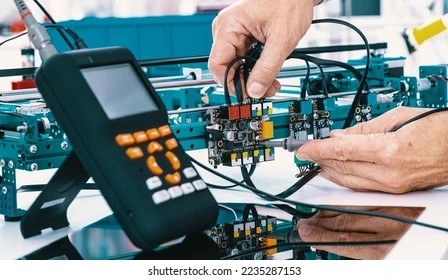
This course introduces the fundamental principles of electrical and electronic measurement and the characteristics of measuring instruments, including accuracy, precision, resolution, sensitivity and errors. It explains the static and dynamic behavior of instruments and the working of basic measuring devices such as voltmeters, ammeters and multimeters, including digital multimeters. The course covers signal generation techniques using AF oscillators, sine and square wave generators and function generators, along with wave analysis using spectrum and harmonic distortion analyzers. It also presents the working principles and applications of DC machines, single-phase induction motors and stepper motors used in control systems. The concepts of transducers and sensors are introduced with emphasis on strain gauges, LVDT, RVDT, ultrasonic and touch sensors for displacement and proximity measurement. Further, the course explains the operation and applications of oscilloscopes, including CRO and digital storage oscilloscopes, for waveform visualization and measurement. Modern test instruments such as digital multimeters and PC-based data acquisition systems are also discussed. Overall, the course develops the ability to understand, select and apply appropriate instrumentation devices and measurement techniques in electrical and electronic engineering applications.
It provides comprehensive knowledge of electrical and electronic measurement systems and instrumentation techniques used in engineering applications. It covers the fundamental characteristics and performance of measuring instruments, including static and dynamic parameters, errors and sensitivity. The course introduces analog and digital measurement instruments such as voltmeters, ammeters and multimeters, along with signal generation and waveform analysis using oscillators, function generators and spectrum analyzers. It also explains the working principles and applications of DC machines, single-phase induction motors and stepper motors relevant to instrumentation and control systems. The study of transducers and sensors, including strain gauges, LVDT, RVDT, ultrasonic and touch sensors, enables understanding of physical parameter measurement. Further, the course explores signal visualization and testing using cathode ray oscilloscopes, digital storage oscilloscopes and modern data acquisition systems. By the end of the course, students will be able to understand, analyze and apply electrical and electronic instrumentation devices for measurement, testing and industrial automation applications.

0 Reviews
To strive for academic excellence and impart quality education with emphasis on Electronics and Communication Engineering. - To inculcate the habit of executing effective implementation and rectification of Electronics Engineering problems in the minds of all concerned, which they can apply in their professional life in future.